COMPARING THE OPTIONSWhich Water Treatment System Is Right for Your Clearwater Home?
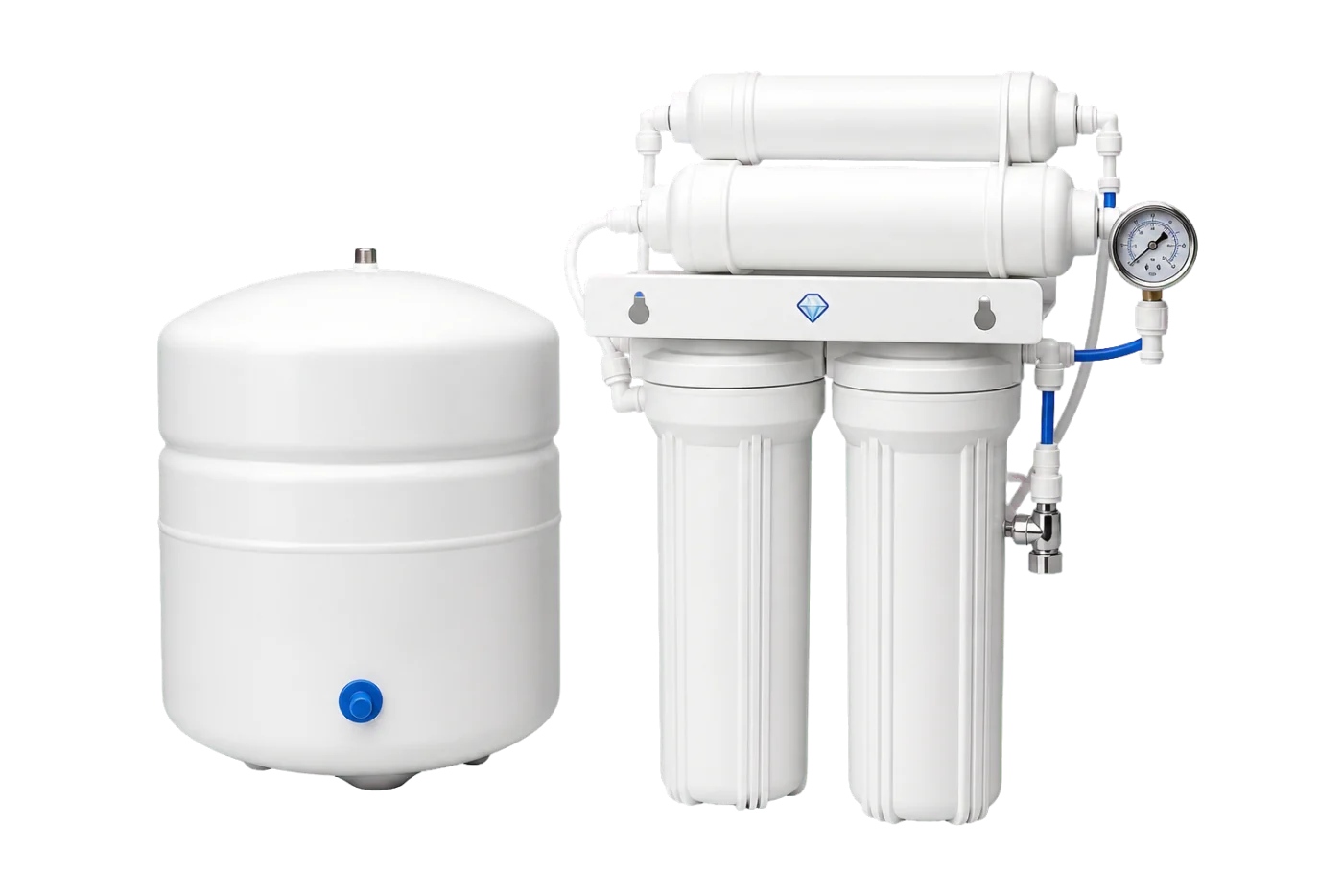
A pitcher or faucet filter is inexpensive and treats a small volume at one tap. Reverse osmosis produces a more refined drinking supply, also at one tap, with a storage tank and periodic membrane replacement. Whole-house filtration treats everything entering the property. A softener does none of the above - it targets hardness minerals specifically. Most homes land on one or two of these, rarely all four.
- Pitcher or faucet: lowest cost, smallest scope
- Reverse osmosis: refined water at one tap
- Whole-house: every outlet in the property
WHY CONSISTENCY MATTERSPartial treatment produces mixed results.
Treating one tap while the rest of the house draws untreated water is a reasonable choice for some households, but it means the shower, the laundry and the appliances are unaffected. Households that want the same water everywhere generally need to treat at the entry point instead, and that decision is easier to make once the trade-offs are laid out.
- One tap treated, or all of them
- Appliances only benefit from whole-house
- Both approaches can be combined
MAKING THE CHOICEThe shortest route is a conversation.
We will not know which of these fits your Clearwater property until we have seen the supply and heard what you want to change. That is what the assessment is for, and it costs nothing.
- Options compared for your property
- Sizing and placement confirmed on site
- Quote follows the recommendation
WHY WORK WITH USWe will tell you when you need less.
There are four sensible answers to a water quality problem and only some of them involve buying much equipment. If a drinking-water system solves what is bothering you, we will say so rather than steering you towards a whole-house installation you did not need.
- Options compared, not just one offered
- Recommendation matched to the concern
- Quote follows the advice, not the other way round
THE OPTIONSUnderstanding Your Water Filtration Options
Four approaches cover almost every residential situation, and they differ in scope, cost and what they actually address. A pitcher or faucet filter is the cheapest and treats the smallest volume. Reverse osmosis refines a modest quantity thoroughly at one tap. Whole-house filtration treats everything entering the building. A softener does none of those three jobs and targets hardness minerals specifically.
- Point-of-use: one tap, lowest cost
- Reverse osmosis: refined output, one tap
- Whole-house: every outlet in the property
POINT OF ENTRYWhole-House Water Filtration
Its purpose is consistency. By treating the supply before it branches through the building, every fixture receives the same water. This is the option households choose when the concern is not confined to drinking water but extends to showers, laundry and the appliances plumbed into the same line.
- Treats the supply once, at entry
- Covers fixtures a countertop filter cannot
- Foundation for any further stages
REFINEMENTReverse Osmosis for Clearwater Kitchens
Its purpose is depth rather than breadth. A membrane refines a small daily volume far more thoroughly than a whole-house system is designed to, delivered through a dedicated tap. It is the right answer when drinking and cooking water specifically is the priority.
- Thorough treatment of a small volume
- Dedicated outlet at the kitchen sink
- Storage tank and periodic membrane change
HARDNESSWater Softening for Clearwater Homes
Its purpose is scale management. Ion exchange reduces the calcium and magnesium that leave deposits on fixtures and inside heating equipment. It does not improve taste or remove chlorine, which is precisely why it is not interchangeable with filtration.
- Targets dissolved hardness minerals
- Reduces scale on fixtures and heaters
- Does not address taste or chlorine
COMBINATIONSDo You Need More Than One System?
Sometimes, but not always. Because these technologies solve genuinely different problems, a household concerned with both taste and scale may need two of them working in sequence. A household concerned with only one of those things usually does not. The honest answer depends on what the assessment finds.
- Different technologies, different targets
- Sequence matters when combining them
- Often fewer systems than expected
BEFORE RECOMMENDINGProfessional Water Assessment
Assessment precedes recommendation for a straightforward reason: without it, any advice is guesswork dressed up as expertise. Looking at the supply, the entry point, the plumbing and the household's actual concerns is what turns four possible answers into one appropriate one.
- Supply and plumbing reviewed on site
- Testing where it is warranted
- One recommendation, explained clearly
FAQWhich system should I choose first?
It depends on what is bothering you. If the concern is taste at the kitchen tap, a drinking-water solution may be enough. If it extends to showers and laundry, whole-house treatment is the more logical starting point.
FAQIs a softener a type of filter?
No. A softener exchanges hardness minerals rather than filtering particles or compounds. The two technologies are often installed together but they are not substitutes for one another.
FAQCan I start small and expand later?
Frequently yes, if the initial installation allows for it. We consider likely future stages when specifying so that adding one later does not mean rebuilding the arrangement.
FAQHow do I know which problem I actually have?
Describing what you notice is usually enough to narrow it considerably. Scale around taps points one way, a chlorine taste points another. The assessment confirms which.