
For your family
Cleaner-tasting water for drinking, cooking and everyday hydration.
From taste and shower comfort to appliance care and reduced bottled water, filtration can support everyday life in more places than the kitchen — especially in Florida homes dealing with hard water.
Schedule a Free Assessment→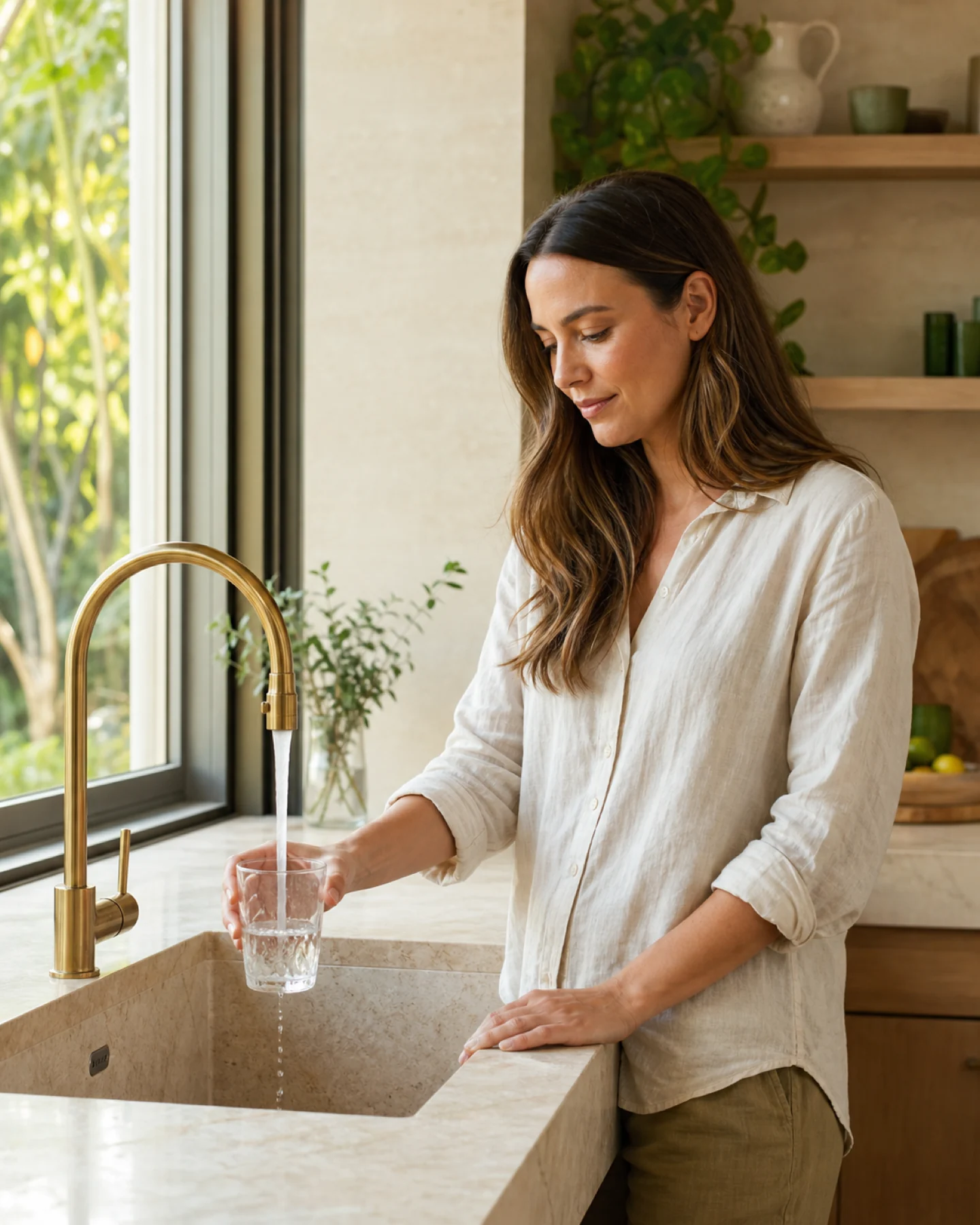
Cleaner-tasting water for drinking, cooking and everyday hydration.
Reduce exposure to the drying taste and feel associated with chlorine.
Help manage sediment and scale around fixtures, pipes and appliances.
A point-of-entry system supports the many ways water is used each day, while a dedicated drinking-water system can add finer treatment where it matters most. Which of the benefits below you actually notice depends on what your water needs treating for, which is the honest version of this page: filtration and softening change different things, and neither changes everything.
Taste and smell are the complaints people notice first, and they are usually about what the water carries rather than what is dissolved in it. Where a carbon stage addresses chlorine, the difference shows up in drinking water, in tea and coffee, and in anything cooked in water, because food absorbs what it is boiled in. Households who had been buying bottled water or refilling jug filters usually stop, which is the one benefit that is easy to see for yourself.
This is where filtration and softening diverge. A carbon stage reduces chlorine, which is what people describe as the dry feeling after a shower. Softening addresses hardness, which is what makes soap and shampoo lather poorly and leaves a film behind. If your complaint is that soap does not lather, filtration will not change it; if it is the smell of the water, softening will not change that. Knowing which one you have is the difference between a system that helps and one that disappoints.
Scale is deposit left behind by dissolved hardness minerals, and it accumulates where water is heated or where it evaporates: inside the water heater, in kettles, around taps and on glassware. Softening reduces the rate at which new deposit forms. It does not remove deposit that is already there, so a heater that has been collecting it for years needs attention on its own terms. Appliances that heat water are where this matters most, because that is where deposit does the most work.
A page of benefits is worth very little without this section. Filtration does not remove hardness, so it will not stop scale. Softening does not change taste or remove chlorine. Neither reverses damage already done to a heater or fittings. No system removes everything, and what any given system reduces depends on the media chosen during specification rather than on the size of the housing. Anyone promising all of these outcomes from one box is describing a product that does not exist.
Which of these benefits applies to your house depends on what your water needs treating for. The comparison guides set out how to tell, and the assessment establishes it.
Compare the three approaches →Softener or filter? →Schedule a Free Assessment →
Treatment at every outlet rather than one tap, which means drinking water, cooking, showers and laundry all draw from treated water. What specifically improves depends on the media in the system: where a carbon stage is included, taste and chlorine odor are the usual differences people notice.
Where the cause is chlorine, a carbon stage addresses it and the shower feels different. Where the cause is hardness, which also makes soap lather poorly, softening is the technology that applies. The two are often confused, and the fix is different for each.
Softening reduces the rate at which new deposit forms, because scale comes from dissolved hardness minerals. It does not remove deposit that has already built up, and filtration does not address hardness at all.
It depends on where your complaint appears. A taste concern confined to drinking water can be answered at the kitchen tap; a smell noticeable in the shower or sediment reaching every outlet is a property of the supply and has to be addressed where it arrives.
Tell us about your home and your water goals. We’ll help shape the right next step.