
Multi-stage treatment
Sediment and carbon pre-filtration protect the ultra-fine membrane.
A dedicated under-sink reverse osmosis system, professionally installed for households seeking exceptionally refined water for drinking, cooking and hot beverages.
Book an assessment→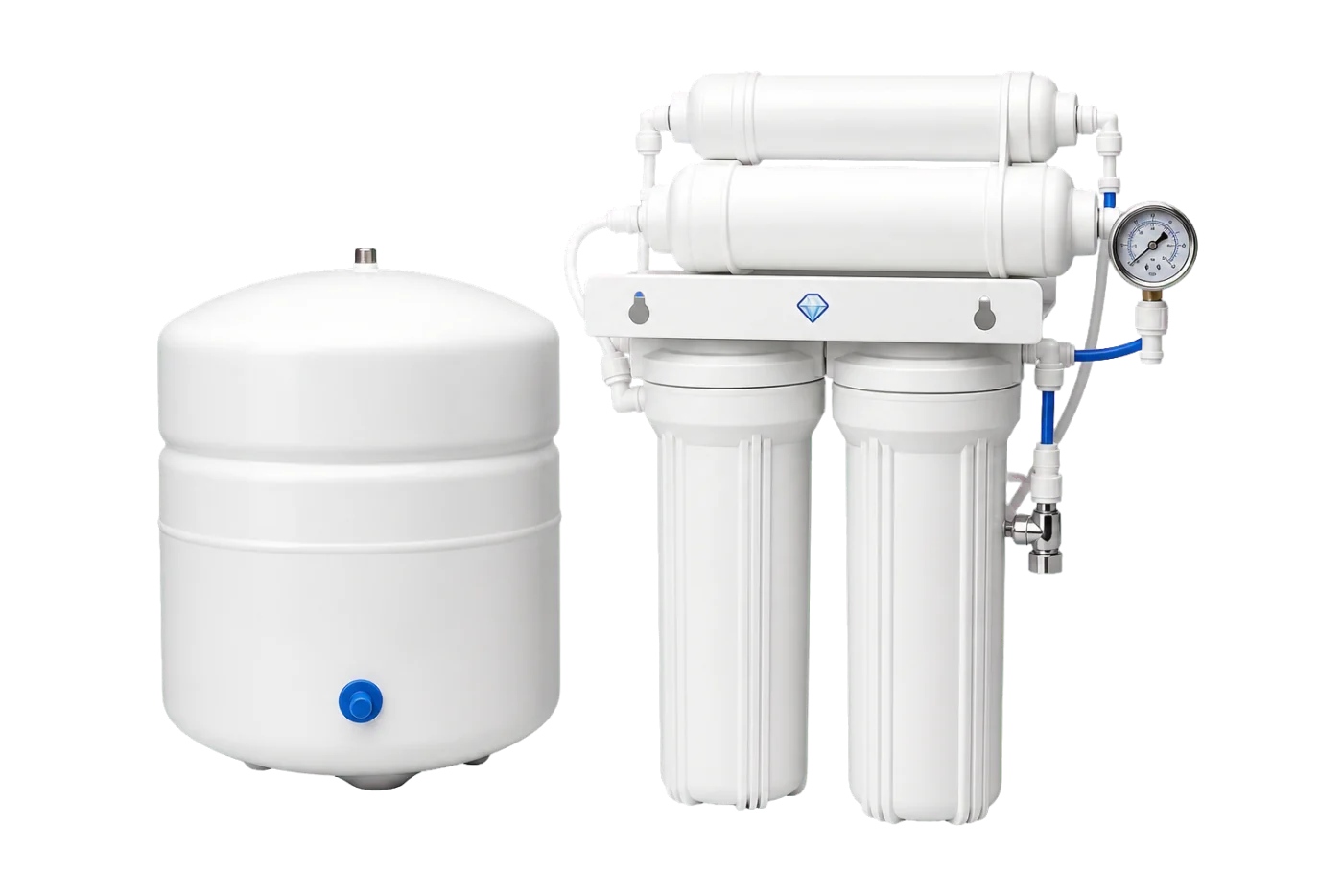
Sediment and carbon pre-filtration protect the ultra-fine membrane.
Convenient filtered water at the kitchen sink without treating unnecessary volume.
Straightforward replacement scheduling helps preserve long-term performance.

Reverse osmosis is best matched to drinking and cooking applications. We confirm available space, feed pressure and the preferred tap position before recommending a configuration.
Reverse osmosis treats water in stages. Pre-filtration removes sediment and chlorine that would otherwise shorten the life of the membrane. The membrane itself is the working stage: pressure pushes water through an extremely fine barrier, and a portion of the dissolved content is rejected to drain rather than passing through. A post-filter commonly polishes the water on its way to a dedicated tap. What any given system reduces depends on the membrane and configuration, which is why we describe it in those terms rather than claiming it removes everything.
These two are complementary rather than competing. A whole-home system treats the full volume entering the property to a consistent standard, covering showers, laundry and appliances as well as the kitchen. Reverse osmosis treats a modest daily volume far more thoroughly, at one outlet. Running an entire property through an RO system would be impractical, which is precisely why the two are usually installed alongside one another.
The usual position is under the kitchen sink, with the unit and a small storage tank in the cabinet and a separate tap fitted at the sink. Placement depends on available cabinet space, access to a drain connection and where the household actually draws drinking water. Alternative positions are possible where the kitchen layout requires it.
An RO tap covers more than a glass of water. Coffee and tea are almost entirely water, and the character of the supply carries into both. The same applies to stock, pasta water and anything else where water is the main ingredient. Households also commonly use it for ice, which tends to make any taste in the supply noticeable once it melts.
Installation involves fitting the unit, connecting it to the cold supply, running a drain connection and mounting the dedicated tap. The system is then flushed and tested before use, and we show you where the filters sit and how the tap behaves. Doing this properly matters more than it might appear, since drain connections and tap placement are the details that cause problems later when rushed.
Pre-filters and post-filters are replaced periodically, and the membrane has a longer working life than the filters around it. Actual intervals depend on the equipment installed, the incoming water and how much the household draws, so we set the schedule for your system at handover rather than quoting a figure that may not apply.
It suits households whose priority is specifically drinking and cooking water, and who want a standard beyond what a whole-home filter delivers. It is less relevant where the concern is spread across showers, laundry and appliances, since those call for treatment at the point of entry instead. Existing treatment matters too: what is already installed changes what an RO stage adds.
No system removes everything. What an RO system reduces depends on the membrane and configuration. We describe performance in those terms rather than making absolute claims.
Not necessarily. Whole-home filtration already improves every tap. Reverse osmosis is an optional further stage for households wanting a higher standard specifically at the kitchen.
Usually yes. A separate tap keeps the treated water for drinking and cooking rather than sending the full kitchen volume through the system unnecessarily.
Enough for the unit and a small storage tank, plus access for filter changes. We confirm the cabinet space and drain access before specifying anything.
Pre and post filters are changed periodically and the membrane less often. Intervals depend on the equipment and household use, so they are set for your installation rather than quoted generically.
Often yes. It is a point-of-use addition, so it can generally be fitted after a whole-home system is already in place, subject to space and drain access at the sink.
Tell us about your home and your water goals. We’ll help shape the right next step.