
Sediment control
High-capacity stages help manage debris before finer treatment.
A water treatment approach for Florida homes, designed for the sediment, organic material and microbial risks that can be present in captured rainwater.
Book an assessment→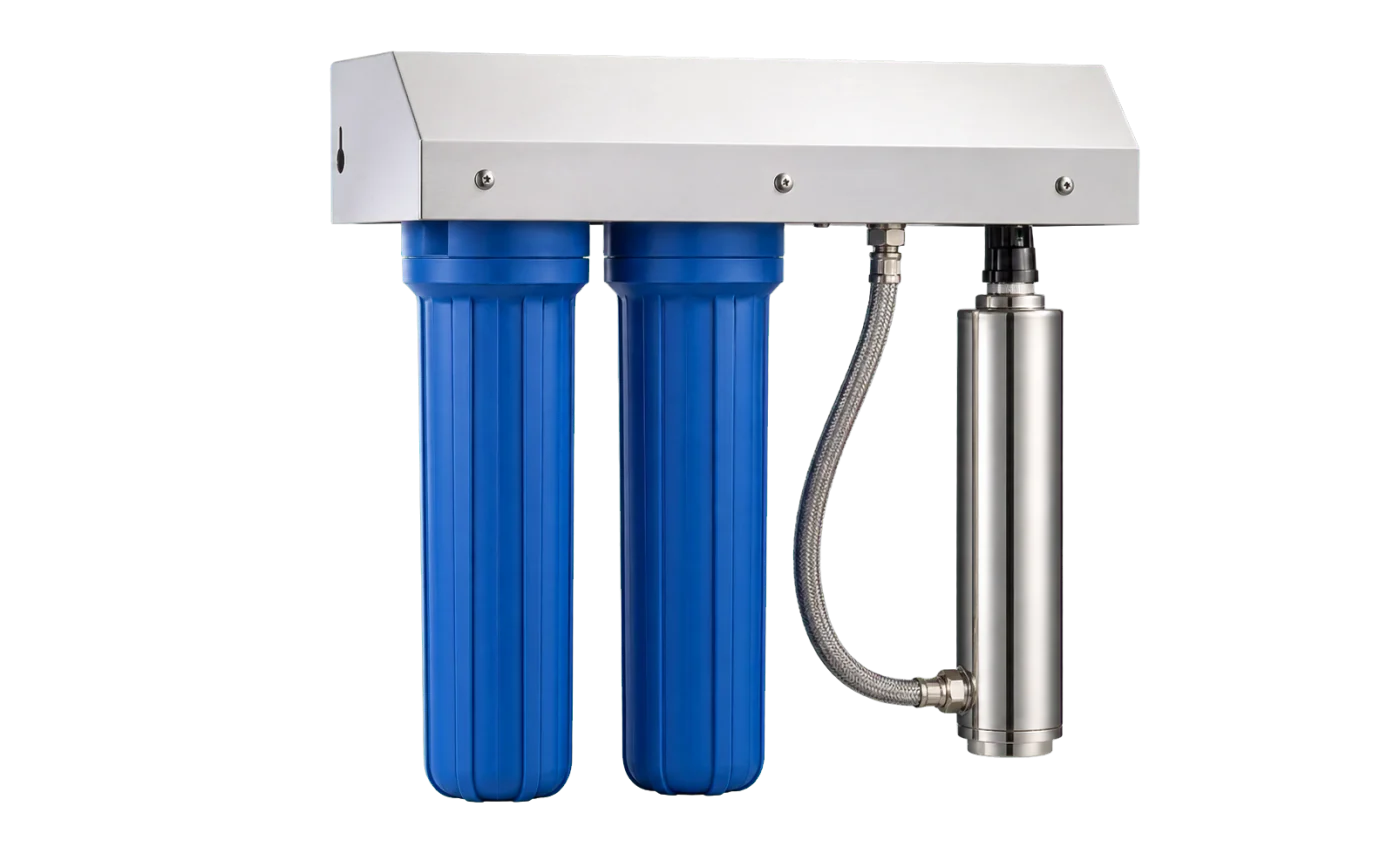
High-capacity stages help manage debris before finer treatment.
UV options can be included where microbial treatment is required.
Tank size, pump setup and intended use shape the final configuration.

Rainwater needs a different treatment sequence from municipal water. We review the tank, pump, plumbing route and intended household use before setting filtration stages.
Municipal water reaches the property already treated, and it usually carries a disinfectant residual that keeps it stable on the way to the tap. Captured rainwater has neither. What it does carry depends on the roof, the gutters, the tank and how long the water has been standing, which is why a rainwater system is specified from the catchment down rather than from a product list.
Before any filtration is specified we look at the collection side: the catchment area, whether a first-flush arrangement is in place, how the tank is covered and whether light is being excluded. Sediment settles into a layer at the bottom of most tanks and the draw-off point sits above it. These details change what the filtration downstream is actually being asked to do.
Rainwater is usually delivered by a pump rather than by mains pressure, so the flow rate and pressure that pump produces set the limits for everything after it. A filtration train sized without reference to the pump either restricts flow at the taps or gets pushed beyond the rate its stages were intended to run at. We take the pump specification and the household peak demand together.
Sediment filtration is normally staged rather than done in one step. A coarser cartridge takes out the bulk of the suspended material so that a finer cartridge behind it is not blinded within weeks. Where taste or organic material is a concern, a carbon stage can be included. The exact combination depends on what the water is like and what the water is being used for, and not every installation needs every stage.
Ultraviolet treatment is used to inactivate microorganisms as water passes the lamp. It only works on water that is already clear: suspended particles shade organisms from the light, so UV is placed after filtration rather than before it. A UV stage also needs a power supply at the unit, and the lamp is a consumable that loses output over time whether or not it is still visibly lit. Whether UV belongs on a given property, and whether the resulting water is suitable for drinking, is confirmed during the assessment rather than assumed here.
A whole house water filtration system on a municipal supply starts from water that has already been treated, and it is generally addressing taste, odor, chlorine and sediment. A rainwater system starts from untreated water and carries more responsibility as a result: heavier sediment handling, and often a disinfection stage that a municipal installation would not need. The equipment can look similar from the outside; what it is being asked to do is not the same.
Once the configuration is agreed, the work covers mounting the housings where they can be reached for servicing, plumbing them into the line between pump and household distribution, providing power for any UV stage, and commissioning the system so that flow and pressure are checked under real demand rather than at a single open tap.
Rainwater systems are generally more demanding to maintain than municipal ones, because the sediment load varies with the season and with what is happening on the roof. Replacement intervals depend on the cartridges fitted and on how dirty the water actually runs, so we set the schedule against the installed system and adjust it once there is a service history to work from.
Rainwater treatment is relevant where a household already collects and uses tank water, or is planning to. It is not a replacement for a municipal connection and it is not something we recommend to a property that has no rainwater collection in place. Where a home draws on both a tank and a municipal or well supply, each source is looked at on its own terms.
That depends on the water, the system specified and the applicable local requirements, so it is not something we can answer from a web page. Where drinking use is the intention, it is established during the assessment and the system is specified accordingly.
Not every installation includes one. It depends on how the water is being used and what the assessment finds. Where UV is included, it is placed after filtration so it is treating clear water.
More often than on a municipal supply, and the interval varies with the sediment load. Rather than quoting a figure that may not hold at your property, we set the schedule against the installed cartridges and revise it once we can see how the system runs.
A correctly sized system should not leave you short at the taps. Pressure problems usually trace back to stages sized below the pump and household demand, or to cartridges that are overdue for replacement.
The two sources have different requirements, so they are assessed separately. Some properties end up with shared stages and some do not, and that is decided during specification rather than assumed at the outset.
No. Hardness is handled by a softener, which is a different technology addressing dissolved calcium and magnesium. Rainwater is not typically hard in the way groundwater is, which is one of the reasons the treatment sequence differs.
Tell us about your home and your water goals. We’ll help shape the right next step.