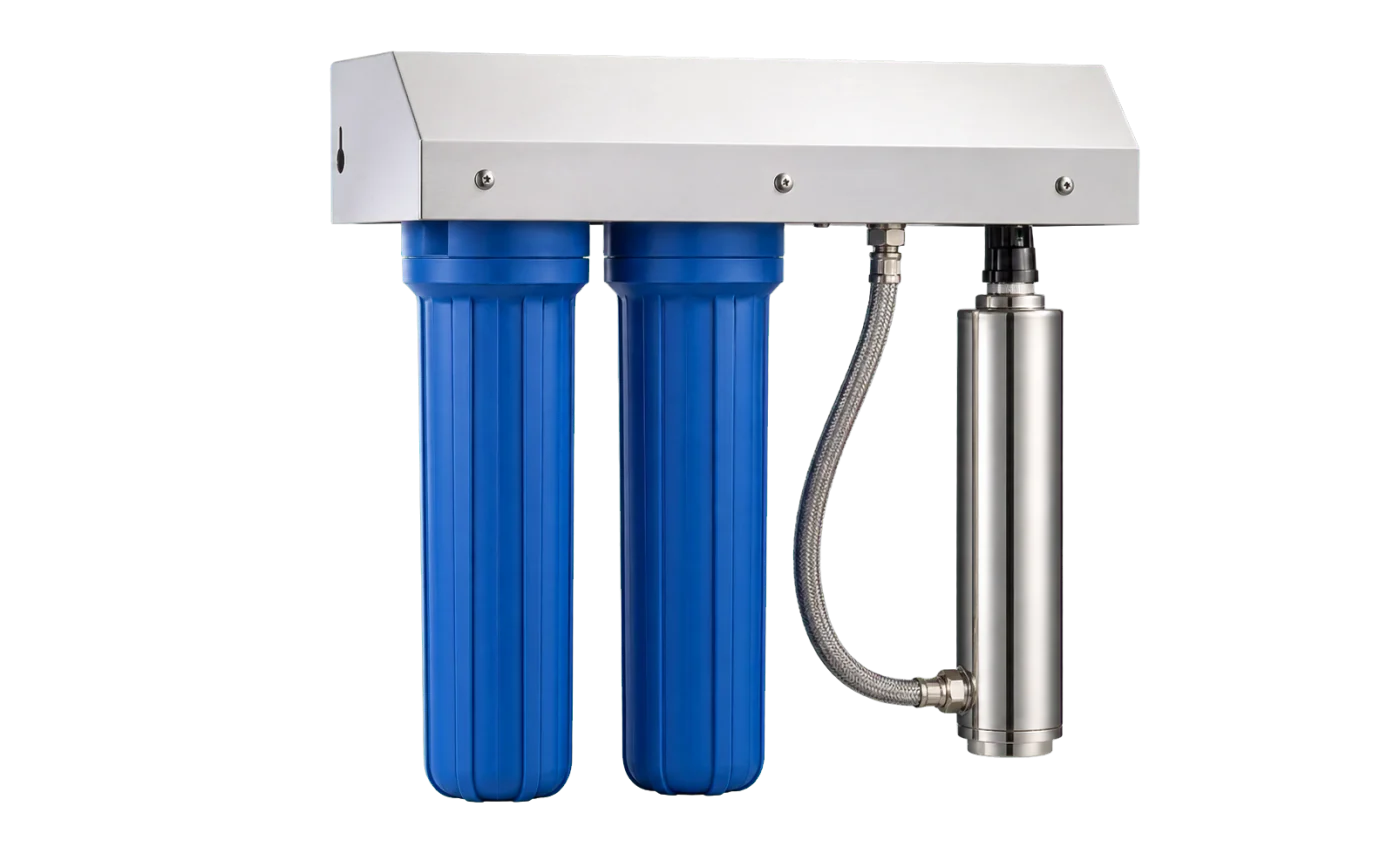
BUILT PER PROPERTYOne Home, One Water Profile, One Customized Solution
A configuration is a sequence of stages, and the sequence matters as much as the parts. Sediment removal generally comes first so later stages are not fouled. Softening and filtration sit in an order determined by what is present. A drinking water stage, if wanted, goes last and serves a single tap. Which stages appear at all depends entirely on the assessment.
- Stages chosen, not bundled
- Order set by what the water contains
- Only what the property needs
SUPPLY TYPES IN GENERALMunicipal and private wells behave differently.
In broad terms, a municipal connection arrives already treated, so the questions centre on taste, chlorine and hardness. A private well arrives untreated, so the assessment has to establish what is present before anything is specified. We do not assume which applies to your address - that is one of the first things we confirm.
- Municipal: treated before it reaches you
- Private well: tested before specifying
- Confirmed at the assessment, not guessed
PERSONALIZED, NOT PACKAGEDThe assessment is the product decision.
We would rather spend time understanding one property than sell the same bundle to twelve. If the outcome of an assessment is that your home needs less equipment than you expected, that is a good result. Our benefits page covers what treatment tends to change around the house.
- Free assessment at your property
- Honest recommendation, including doing less
- Quote built from the findings
WHY HOMEOWNERS WORK WITH USConfigurations, not catalogue items.
We build a treatment sequence stage by stage for each property rather than choosing from a shortlist of bundles. Sometimes that means fewer components than expected, and sometimes it means putting them in a different order than a standard package would.
- Stages selected for your property
- Sequence set by what the water contains
- Nothing included that is not needed
NO TWO ALIKEEvery Home Has a Different Water Profile
Two properties on the same street can arrive at different recommendations. The supply may be the same, but occupancy, plumbing layout, available space and what the household actually wants to change are not. A recommendation that ignores those differences is really just a product being sold twice.
- Occupancy and usage patterns differ
- Plumbing and available space differ
- The desired outcome differs most of all
SUPPLY TYPESMunicipal and Private-Water Considerations
Cape Coral properties sit on a mix of supplies, and the sequence of treatment stages depends on which one feeds the house. That is why the order of the stages is settled after the assessment rather than before it: a configuration that suits one supply can be the wrong order entirely for the other.
- Municipal: treated before delivery
- Private well: tested before specifying
- Confirmed per property, not per neighborhood
PRE-TREATMENTSediment and Whole-House Filtration
Sediment removal usually comes first in a configuration, because particles will foul the stages that follow if they are left in place. Whole-house filtration then handles chlorine, taste and odor across the property. Getting this order right is one of the less visible parts of a good specification.
- Sediment stages placed first
- Whole-house treatment across the property
- Order protects downstream equipment
HARDNESSWater Softener Installation in Cape Coral
Where the assessment identifies hardness as a contributing factor, softening addresses it directly by reducing calcium and magnesium. Where hardness is not the concern, it is left out. This is a decision made per property rather than included by default.
- Reduces the minerals that form scale
- Protects fixtures and heating equipment
- Included by assessment, not by default
DRINKING WATERReverse Osmosis Drinking Water in Cape Coral
An RO stage refines drinking and cooking water at a single tap. Because it treats a small volume very thoroughly, it fits naturally at the end of a configuration rather than at the start, serving the outlet where the standard matters most.
- Final stage, single outlet
- Thorough refinement of a small volume
- Optional depending on household priorities
ASSEMBLYBuilding a Multi-Stage Water Treatment System
When several technologies are combined, they work as a sequence rather than a collection. Sediment first, then filtration, then softening where required, with any drinking-water stage last. Which of those appear at all, and how each is sized, comes out of the assessment rather than a standard template.
- Stages selected, then ordered
- Each sized to the property
- Nothing included without a reason
FAQWhy would two similar homes need different systems?
Because household size, peak water use, plumbing layout and the outcome the owner wants all differ. Those factors influence sizing and stage selection at least as much as the supply itself.
FAQDo I need to know my water source before calling?
It helps, but it is not required. Establishing the supply type and what it carries is part of what the assessment covers.
FAQCan stages be added later?
Usually, provided the initial installation was specified with that possibility in mind. We plan for it where a household indicates future changes are likely.
FAQIs more stages always better?
No. Every additional stage adds cost and maintenance. The right number is the smallest that addresses what the assessment actually found.